English| EUR
Suggested for you
More currencies
Choose a language
A low-slung wooden boat with paper lanterns along its eaves is not a novelty on the Sumida — it is a dining room that has been operating in some form since the Edo period. Travellers researching the yakatabune dinner cruise price usually want one number and one honest account of what that number buys. This page gives both, then explains the variables that move it.
Quick answer
A standard yakatabune dinner cruise on the Sumida River costs 12,000 JPY per person, covering a multi-course meal and free-flow drinks for the duration of the voyage. Operators run daily, with offices reachable from 08:00 to 22:00. The figure is per head rather than per boat, and seats are sold only by advance reservation — walk-up boarding is not part of how these boats work.
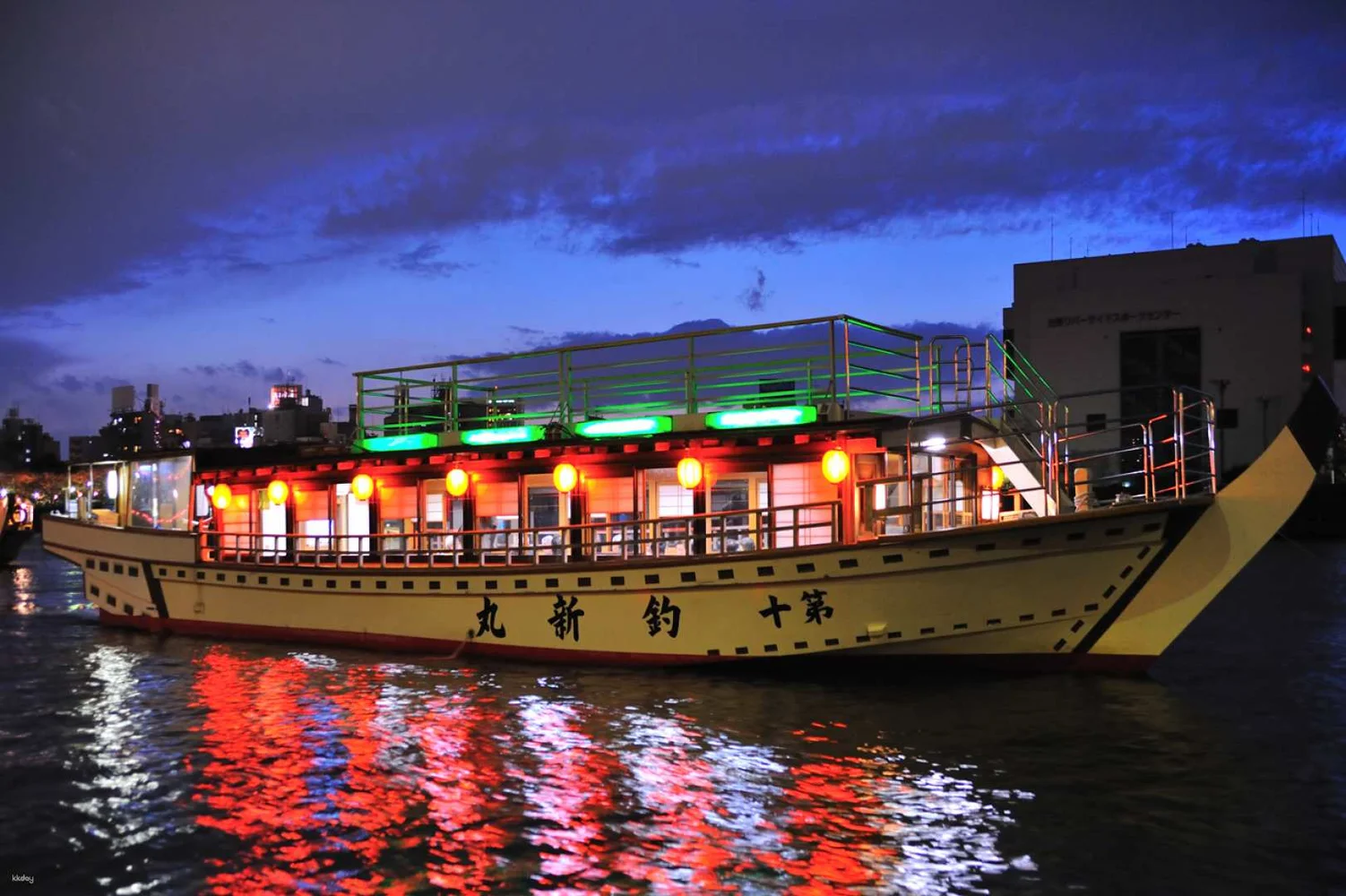
The word yakatabune describes a roofed pleasure boat, and the format is older than almost anything else a visitor eats aboard in Tokyo. Edo-period merchants chartered them for cherry-blossom viewing and firework nights; today the same low silhouettes slide beneath Kachidoki Bridge and past the Azumabashi span with tatami matting underfoot and a tempura station humming at the stern. That continuity is the first thing to understand about the yakatabune dinner cruise price — the fare is not buying a boat ride with food attached, but a two-hour seated meal that happens to be moving. What sits on the low tables is fairly consistent across operators along the Sumida River piers. Tempura fried to order is the anchor, usually shrimp and seasonal vegetables, alongside sashimi, a simmered dish, rice or noodles, and a light dessert. Drinks are the part that surprises people: the standard arrangement is nomihodai, or free-flow, meaning beer, sake, shochu, highballs and soft drinks pour continuously rather than accumulating on a tab. Anyone comparing a Tokyo yakatabune boat tour against a conventional restaurant should factor this in, because a comparable izakaya evening with unlimited drinks lands in similar territory before any river view is counted. Vegetarian, halal and allergy-adjusted courses exist at several operators but are prepared to order and must be flagged when reserving, not on the day. Several variables sit above or below the headline figure. Charter pricing applies when a group takes a whole vessel rather than joining a shared sailing. Peak nights — the Sumida River Fireworks Festival in late July, and the sakura window in late March and early April — sell out months ahead and run on separate terms. Summer sailings, including those through August 2026, add a rooftop deck component on many boats, which is where the Tokyo Skytree and the illuminated bridges are best seen. Winter boats trade that for glassed-in warmth and clearer air. Used properly, the yakatabune dinner cruise price is a planning number rather than a shopping one. It tells a traveller that a Sumida River evening cruise is a single fixed outlay per person, not an open-ended tab, and that the only real decision left is which sailing date and which dining format to request. Everything else — the pier, the boarding sequence, the timing of the light — is logistics, and the dedicated sections below cover each in turn.
“The fare is not buying a boat ride with food attached, but a two-hour seated meal that happens to be moving.”
Yakatabune operators on the Sumida River maintain consistent daily operating hours to accommodate dinner cruise schedules. These hours apply uniformly across the week.
Maximizing the value of your 12,000 JPY dinner cruise depends on aligning your arrival with the seasonal sunset. Planning your visit within the 08:00–21:00 arrival window allows for a transition from daylight cityscapes to illuminated night views of the Sumida River.
Mild, 10°C–20°C
Riverside blossoms enhance the view during the dinner cruise. Book early due to peak seasonal demand.
Warm, 25°C–32°C
Evening cruises offer relief from daytime heat. Fireworks displays often impact scheduling and prices.
Cool, 15°C–22°C
Stable weather provides clear visibility for evening lights. This period is favored for comfortable night boarding.
Cold, 2°C–10°C
Clear air improves night visibility for city lights. Fewer crowds make winter a quiet time for cruising.
Verdict: The best time to visit for optimal viewing is during the mild weather of April or October, arriving well within the 08:00–21:00 window to secure your boarding position.
This procedure takes you from choosing an operator to stepping aboard a yakatabune on the Sumida River. Reserving takes a few minutes online or by phone, and boarding on the day takes around 20 to 30 minutes from the pier gate to your seat.
Compare the boat companies listed through the Tokyo yakatabune association at https://www.yakatabune-kumiai.jp/ and pick a sailing date. Most people forget that boats sail on fixed departures rather than continuously, so pick the date before you plan anything else around it.
Book through the operator's reservation form or call 03-5825-5526 to secure seats, as cruises require advance reservations. Weekend and cherry blossom sailings fill weeks ahead, so treat a same-day enquiry as unlikely to succeed.
State the number of guests and flag any allergies, vegetarian requests, or children when you reserve. Menus are prepared per boat in advance, so requests made on the day usually cannot be accommodated.
Keep the confirmation email or reference number, plus the pier name written in Japanese. Operators depart from different Sumida River piers, and the wrong pier is the most common reason people miss a boat.
Present your reservation name at the gangway, remove your shoes where asked, and follow staff to the assigned low table. Bring socks, as tatami seating is standard on traditional boats.
Yakatabune dinner cruises depart from various piers along the Sumida River, such as the Imado area in Taito-ku. Access depends on your specific operator's assigned dock location.
Asakusa Station (Tobu Skytree Line, Tokyo Metro Ginza Line, Toei Asakusa Line)
Direct to Sumida River piers (e.g., Imado area)
Confirm your exact pier location with your operator well in advance, as multiple docks exist along the river. Arriving at the designated pier early ensures a smooth boarding process for your cruise.
Everything you need to know about yakatabune dinner cruise price
The standard yakatabune dinner cruise price is 12,000 JPY. This fee serves as the base rate for a comprehensive dining experience on the water.
Most operators include free-flow drinks as part of the total package. This standard beverage service is factored into the overall yakatabune dinner cruise price.
You should check with individual operators regarding age-specific reductions as policies vary by provider. Always confirm these details before finalizing your arrangements for the Tokyo river excursion.
Cruises require advance reservations to ensure availability. It is recommended to contact operators well before your desired date to secure a spot on a private or shared vessel.
The current 12,000 JPY rate covers a multi-course meal and free-flow drinks. This all-inclusive structure ensures guests enjoy a complete Japanese hospitality experience.
Reservations are strictly required for these boat tours, so walk-ins are not accommodated. Please visit the official site to organize your booking through an authorized operator.
While rates are generally stable, they are standardized at 12,000 JPY for the standard dinner service. Changes to seasonal menus do not typically alter this primary yakatabune dinner cruise price.
Private Yakatabune Dinner Cruises
Read more Tickets & toursShinagawa Yakatabune Cruises
Read more Tickets & toursYakatabune River Cruise Experience
Read more Tickets & toursSightseeing Yakatabune Dinner Cruises
Read more Tickets & toursTokyo Bay Yakatabune Cruises
Read more Tickets & toursAsakusa Yakatabune Dinner Cruises
Read more