2 hr 30 min
Sumida River Yakatabune Traditional Dinner Cruise
Float through nighttime Tokyo on a classic Japanese dinner boat, feasting on 14 courses with free-flow drinks.
Reserve
Hand-picked by our editors — only the best 5 cruises from 60 reviewed.
Verified partners for every tour, free cancellation where available, and instant confirmation on every booking.
2 hr 30 min
Float through nighttime Tokyo on a classic Japanese dinner boat, feasting on 14 courses with free-flow drinks.
Reserve
1 hr 30 min
Step aboard a centuries-old Japanese houseboat for sukiyaki, shamisen music, and sweeping Tokyo Bay views.
Reserve
1 hr 40 min
Float past Tokyo's skyline on a heritage houseboat with hot pot dining, live music, and an optional Tokyo Tower visit.
ReservePrices from verified partners. Availability updates in real time at checkout. Free cancellation policies apply where shown.
The landmarks, rooms, and views travelers on this tour remember — all visible on a single visit.
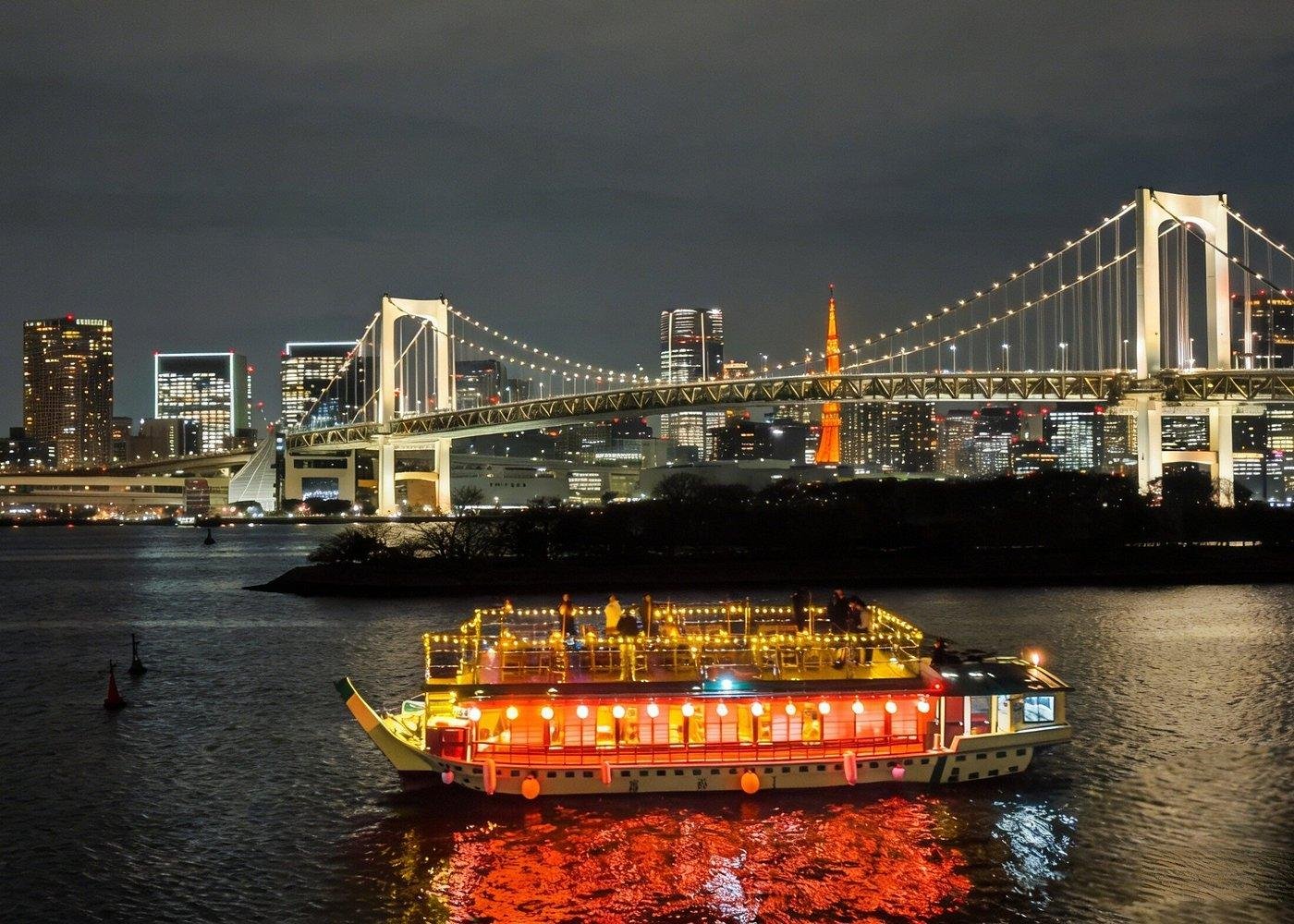
Pass under several historic and modern bridges including the red Azuma Bridge.
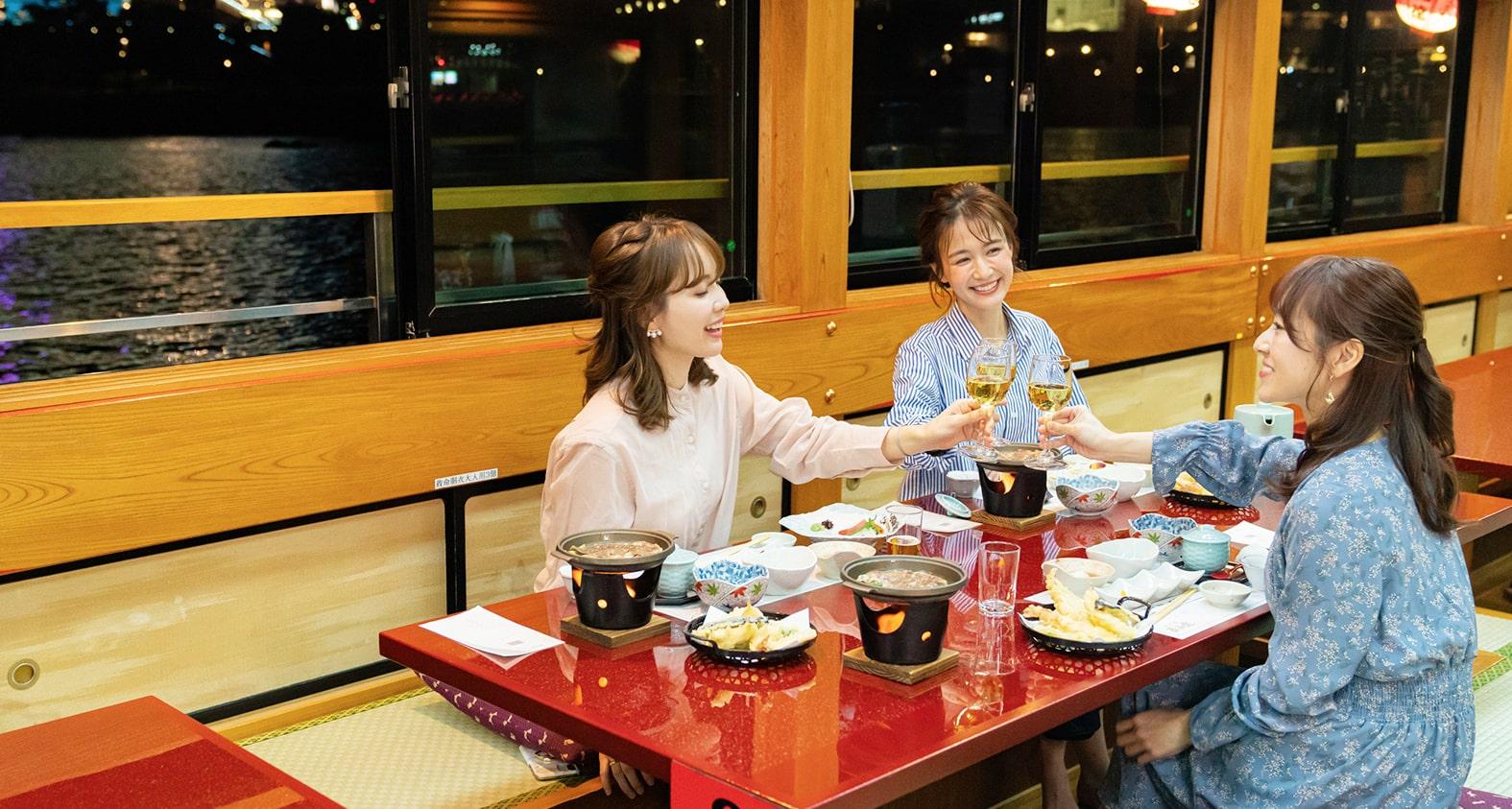
The interior features tatami mats and low tables for an authentic atmosphere.
Witness the illuminated Tokyo Skytree reflected on the water during evening tours.
Enjoy freshly prepared tempura served by the boat crew during the cruise.
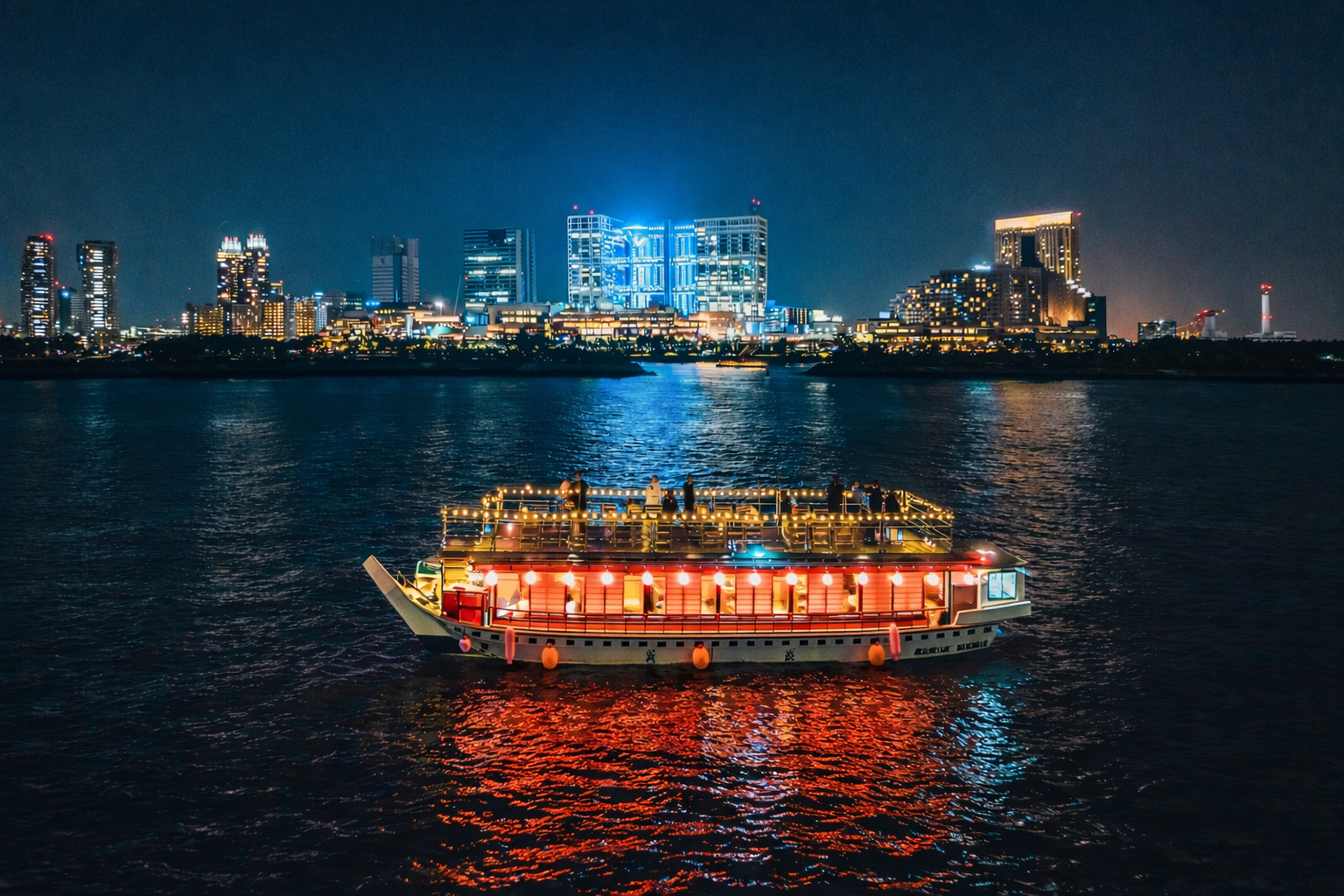
View the bustling city landscape from a unique perspective on the water.
They complement each other; most visitors who do both call the yakatabune river cruise tokyo the more culturally immersive experience, while the Tokyo Water Bus is preferred for efficient transit between city landmarks.
| Feature | Top pick Yakatabune | Water Bus |
|---|---|---|
Cultural Authenticity |
Traditional wooden design | Modern industrial design |
Dinner Inclusions |
Multi-course seasonal meal | No food service |
Speed and Efficiency |
Leisurely pace | High-speed transit |
Privacy Level |
Intimate small-group atmosphere | Open public seating |
View Perspective |
Low-level water proximity | Elevated glass cabin viewing |
Pricing Model |
13,000 JPY (summer) flat fee | 1,000–2,000 JPY per segment |
| See tickets → |
Verdict: Choose a yakatabune river cruise tokyo tour for an evening of historic ambiance, or select the water bus when prioritizing swift access to Tokyo landmarks using yakatabune river cruise tokyo tickets is not required.
Choose your ticket, select your date, and reserve in under two minutes. Secure checkout handled by our verified partner.
Instant confirmation by email, with a mobile voucher you can save offline. No printing, no queuing at a collection desk.
Arrive at the entrance, show your voucher on your phone, and walk in. Most tickets include priority or skip-the-line access.
Practical details for your visit straight from our verified partners — hours, access, rules, and how to get there.
Sumida River, Tokyo
Check your booking for the exact pier name
Use Asakusa Station on the Ginza or Asakusa lines to reach river piers.
Casual attire is appropriate for a yakatabune river cruise tokyo. Many boats require guests to remove shoes before entering the traditional cabin.
Space is limited inside the vessel for your yakatabune river cruise tokyo tour. Please avoid bringing large luggage or oversized backpacks.
Photography is encouraged during your yakatabune river cruise tokyo. Capture the cityscape from the deck, but be mindful of other passengers.
Some piers and vessels used for a yakatabune river cruise tokyo may not be fully wheelchair accessible. Please contact the operator in advance to confirm boarding arrangements.
Mobile phones are permitted for photos and communication. Keep usage respectful of others enjoying the quiet atmosphere on the water.
Families are welcome on a yakatabune river cruise tokyo. Children typically enjoy the unique dining experience while viewing Tokyo landmarks.
Traditional Japanese cuisine, such as tempura and sashimi, is served during most yakatabune river cruise tokyo departures. Beverages are generally included or available for purchase.
Pets are generally not permitted on board a standard yakatabune river cruise tokyo. Confirm with your specific operator regarding service animal policies.
Ensure you arrive at the designated pier well before your departure time. The yakatabune river cruise tokyo experience is highly dependent on tides and weather conditions.
Best time to go, insider tips, nearby landmarks, and the cancellation fine print — flip through to skim what matters to you.
How crowds, weather, and events shift across the year.
Cherry blossoms line the river banks during late March and early April.
August offers vibrant evening cruises with cooler temperatures on the water.
Mild weather and changing foliage provide a scenic backdrop for the cruise.
Clear nights offer the best visibility of the illuminated city skyline.
Small details that turn a good visit into a great one.
Secure your yakatabune river cruise tokyo tickets at least two weeks in advance during peak seasons.
Wear slip-on shoes as you will remove them before entering the main dining area of the boat.
Visibility of landmarks can change; monitor local forecasts before your scheduled departure.
If you have dietary restrictions, inform the operator during booking for your yakatabune river cruise tokyo.
Prioritize sunset departures to witness the transformation of the city from day to night.
Non-bookable sights within a short walk — free to visit, easy to pair.
Oldest Buddhist temple in Tokyo with an iconic red gate.
Tallest tower in Japan offering panoramic views of the city.
A green space along the river known for cherry blossom viewing.
Flexible, no hidden fees.
Cancellations must be made within the operator's specified window to qualify for a refund. Standard starting prices for these yakatabune river cruise tokyo tours are 13,000 JPY per adult.
Hand-picked options within walking distance — pick a district for vibe, or a specific hotel for convenience.
Area with many hotels near the river piers.
High-end hotels with views overlooking the water.
The flat-bottomed pleasure boat now moored along the Sumida was once a status object, not a tourist vessel. In the Edo period, daimyo and wealthy merchants commissioned lacquered barges with tatami interiors, ordering them out at dusk to view cherry blossom, fireworks and the moon. The largest were suppressed by shogunal sumptuary edicts in the 1680s for excessive luxury. What survived was the smaller, hardier form: a low wooden hull, paper lanterns strung along the eaves, sliding shoji panels open to the water. Anyone taking a yakatabune river cruise tokyo operators run today is boarding the descendant of that reduced, more democratic craft. The Sumida is the reason the boats exist. Tokyo grew as a water city, its timber, rice and fish moving by barge through a lattice of canals; the river was the high street before the railway. Twelve bridges now cross the central stretch, among them Kiyosu, modelled on a Rhine suspension span, and the vermilion Azuma. From deck level the city rearranges itself — Tokyo Skytree rises 634 metres off the port side, the Asahi headquarters shows its gilt flame, and the Kachidoki drawbridge marks the turn toward Tokyo Bay and Odaiba. Guides on Sumida River dinner cruise routes point out the Rainbow Bridge illumination as the boats idle in open water. Culinary tradition travelled with the hull. Tempura, invented as Edo street food, is still fried aboard and served straight from the pan; sukiyaki and chanko-nabe appear on other menus, the latter borrowed from sumo stable kitchens in nearby Ryogoku. Several yakatabune river cruise tokyo tours pair the meal with live shamisen, the three-stringed lute whose dry, percussive attack was the soundtrack of Edo's pleasure quarters. Geisha performance and taiko feature on the more theatrical sailings. Roughly forty operators remain, most belonging to a cooperative that publishes standards and departure information at yakatabune-kumiai.jp. Their office hours run 10:00–17:00 Monday through Saturday, with Tuesday and Sunday closed. Boarding points are scattered — various piers along the Sumida River, Tokyo — rather than gathered at a single terminal, a survival of the old system in which each boathouse kept its own landing. Typical starting price is 13,000 JPY per adult for a standard shared cruise including dinner. The craft persists because it does something no observation deck can: it holds the city at eye level, moving, while dinner is served on the floor.
"The river was the high street before the railway."
A step-by-step walkthrough of the visit — what you'll see, how long each stage takes, and the details that matter.
You arrive at your assigned pier between 17:00 and 19:00, when the light is going and the skyline begins to switch on. Staff check your name at a folding table on the quay. You leave your shoes in the rack at the gangway and step down into a tatami room barely a metre above the waterline, low tables set in two long rows, lanterns already lit overhead. You sit cross-legged or slide your legs into a sunken well beneath the table. Dinner starts almost immediately — sashimi, then tempura carried out in batches from the galley at the stern, hot enough that you eat it standing at the rail if you want to. On the Edo-era dining sailings the shamisen player kneels at the end of the aisle and works through a short set while the boat noses under Azuma Bridge. Halfway through, the engine slows. You climb the four steps to the open upper deck. Tokyo Skytree stands off one shoulder, the Rainbow Bridge off the other, and the boat holds position for fifteen or twenty minutes so everyone gets the photograph. Then you go back down, finish the last of the pot, and feel the hull turn upriver. A yakatabune river cruise tokyo evening ends where it began: shoes back on, the pier quiet, the lanterns of the next boat already coming downstream.
The piers are generally open from 10:00–17:00, though cruise times vary.
Casual attire is standard, but expect to remove your shoes inside the cabin.
Children are welcome to participate in these yakatabune river cruise tokyo experiences.
Starting prices for a standard shared cruise are 13,000 JPY per adult.
Most yakatabune river cruise tokyo packages include dinner, so outside food is generally not permitted.
Photography is welcome, but be mindful of other passengers during the cruise.
Piers are typically accessible via major train stations like Asakusa; check your booking details.
There is limited space, so it is best to travel light without large luggage.
Operations depend on safety conditions; contact your operator if a cancellation occurs.
You will see iconic structures including the Tokyo Skytree and bridges along the Sumida River.