1 hr 30 min
Tokyo Yakatabune Cruise: Edo-Era Dining on Tokyo Bay
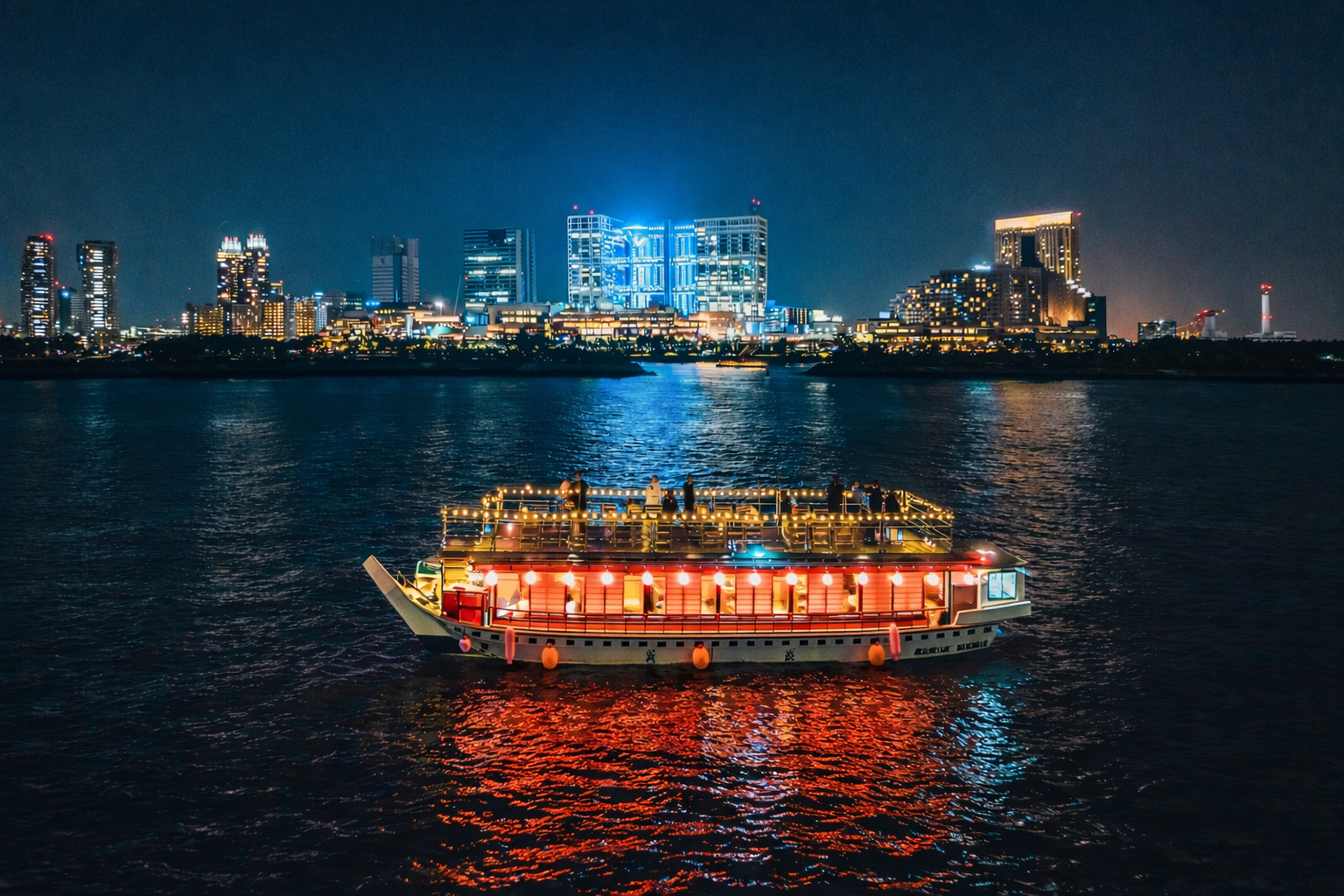
Float across Tokyo Bay on a 400-year-old traditional houseboat with sukiyaki, shamisen music, and skyline views.
Reserve
Hand-picked by our editors — only the best 5 houseboat dinner cruises from 60 reviewed.
Verified partners for every tour, free cancellation where available, and instant confirmation on every booking.
1 hr 30 min
Float across Tokyo Bay on a 400-year-old traditional houseboat with sukiyaki, shamisen music, and skyline views.
Reserve
2 hr 30 min
Drift through Tokyo's glittering nightscape aboard a classic Japanese dinner boat with a 14-course meal and free-flow drinks.
Reserve
1 hr 40 min
Drift past Tokyo's glittering skyline on a lantern-lit houseboat with hot-pot dining and live shamisen music.
ReservePrices from verified partners. Availability updates in real time at checkout. Free cancellation policies apply where shown.
The landmarks, rooms, and views travelers on this tour remember — all visible on a single visit.
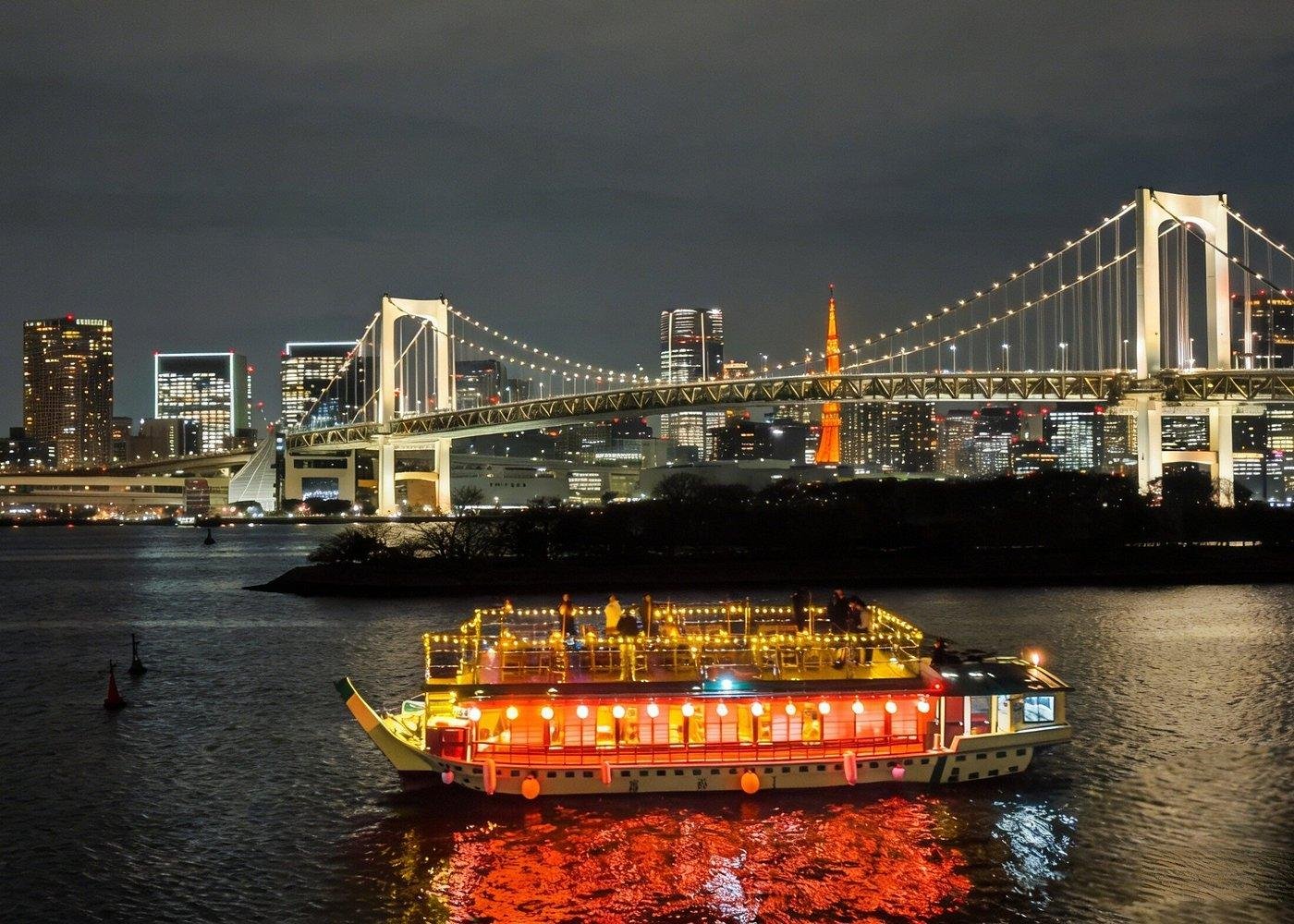
Experience the illuminated Tokyo skyline from the water during your private yakatabune dinner cruise. The river provides a unique perspective of city landmarks that you cannot see from the street.
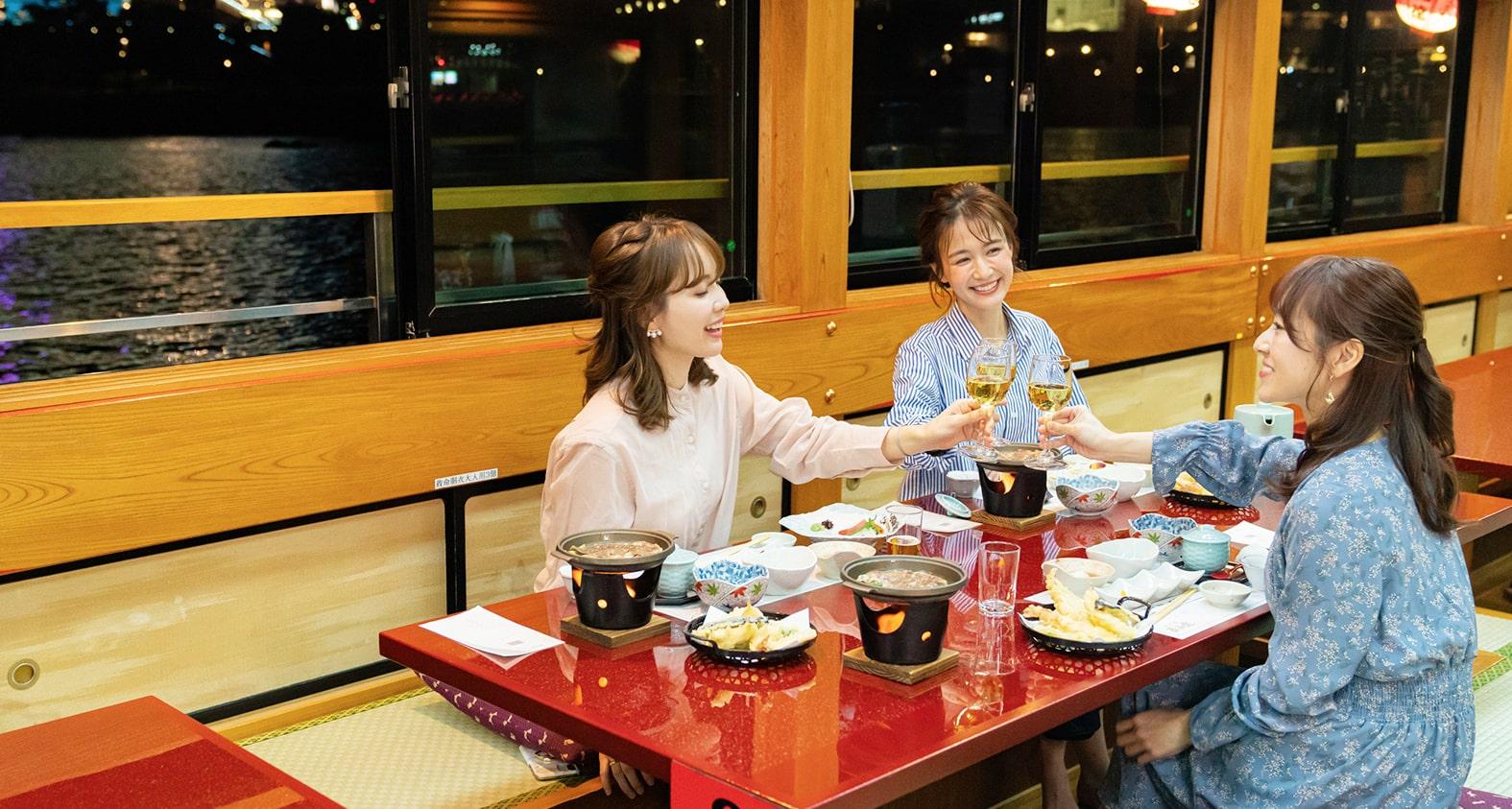
Relax in a cultural setting featuring authentic tatami mat flooring on the boat. This seating style is central to the traditional experience of a private yakatabune dinner cruise.
Enjoy a multi-course meal featuring fresh, local ingredients paired with drinks. Every private yakatabune dinner cruise serves dishes that reflect the flavors of the current season.
The cruise departs near the famous bridge, offering a view of the historic district architecture. It serves as a visual anchor for your private yakatabune dinner cruise.
The interior lighting creates a distinct, warm ambiance perfect for evening photography. Many guests capture the glow during their private yakatabune dinner cruise.
They complement each other; most visitors who do both call the traditional boat the more intimate experience while the modern ships offer superior panoramic observation. Selecting private yakatabune dinner cruise tours provides a cultural immersion distinct from the functional transit of a Tokyo Cruise Ship.
| Feature | Top pick Yakatabune Boat | Modern River Boat |
|---|---|---|
Vessel Type |
Traditional wooden boat | Modern steel vessel |
Dining Experience |
Multi-course tempura meal | Varies by ticket; no meal |
Atmosphere |
Intimate, quiet, historical | Functional, transit-oriented, public |
Seating Layout |
Low floor seating on tatami | Fixed airline-style rows |
Viewing Perspective |
Close-to-water river views | Panoramic elevated deck views |
| See tickets → |
Verdict: Choose the private yakatabune dinner cruise tour for a dedicated banquet setting, or select the modern river boat when securing private yakatabune dinner cruise tickets is not possible for your preferred timeframe.
Choose your ticket, select your date, and reserve in under two minutes. Secure checkout handled by our verified partner.
Instant confirmation by email, with a mobile voucher you can save offline. No printing, no queuing at a collection desk.
Arrive at the entrance, show your voucher on your phone, and walk in. Most tickets include priority or skip-the-line access.
Practical details for your visit straight from our verified partners — hours, access, rules, and how to get there.
Sumida River, Tokyo, Japan
Follow signs near the river bank
Take the Asakusa Line to Asakusa Station and walk 5 minutes. The pier is located near the bridge.
Request a taxi to Azumabashi-sanbashi in Asakusa. Drop-off at the bridge vicinity is standard.
Casual attire is appropriate for a private yakatabune dinner cruise. Please wear comfortable shoes suitable for boarding wooden vessels.
Keep personal belongings minimal as cabin space is limited. Large luggage should be stored at your accommodation prior to your private yakatabune dinner cruise tour.
Photography is encouraged throughout your private yakatabune dinner cruise experience. Please respect the privacy of other guests when taking pictures on deck.
Boarding a traditional boat requires navigating a small gangway. Guests with mobility concerns should confirm vessel accessibility before booking private yakatabune dinner cruise tickets.
Families are welcome to join a private yakatabune dinner cruise. Traditional Japanese seating on tatami mats is standard, though some boats offer table seating.
The 13,800 JPY standard dinner cruise course per person includes meals and drinks. Traditional seasonal cuisine and beverages are served on board.
Best time to go, insider tips, nearby landmarks, and the cancellation fine print — flip through to skim what matters to you.
How crowds, weather, and events shift across the year.
Late March to early April is popular for viewing cherry blossoms along the riverbanks. Moderate temperatures make this an ideal time for a private yakatabune dinner cruise.
August offers vibrant evening atmosphere and fireworks displays. High humidity is common, but the evening river breeze cools the deck during your private yakatabune dinner cruise.
October to November provides crisp, pleasant weather. It is a comfortable period for evening river excursions.
December to February allows for clear views of the illuminated city. Temperatures are cold, so dress in layers for your private yakatabune dinner cruise.
Small details that turn a good visit into a great one.
Reserve your private yakatabune dinner cruise tour at least 2 weeks in advance during peak spring or summer seasons.
The private yakatabune dinner cruise may be affected by extreme wind or weather; confirm status if conditions are poor.
Adhere to the 08:00–21:00 arrival window to ensure you have time to find the pier for your private yakatabune dinner cruise tickets.
Expect to remove shoes when boarding; wear clean, presentable socks for your private yakatabune dinner cruise.
Specify any allergies when you purchase your private yakatabune dinner cruise tickets to ensure the kitchen can accommodate you.
Non-bookable sights within a short walk — free to visit, easy to pair.
Tokyo's oldest temple featuring a massive red lantern and traditional market stalls.
A broadcasting tower offering panoramic views of the entire Kanto region.
A scenic riverside park famous for its cherry trees and river views.
Displays showcasing the architectural and cultural history of Tokyo.
Flexible, no hidden fees.
Cancellation policies depend on the specific operator terms provided at booking. Refunds for the 13,800 JPY standard dinner cruise course per person are subject to the timeframe set by the provider.
Hand-picked options within walking distance — pick a district for vibe, or a specific hotel for convenience.
Modern hotel with views of the Sumida River.
Well-located hotel providing easy access to Asakusa landmarks.
Practical stay close to transport and dining options.
The wooden pleasure boats now moored along the Sumida River began as vessels of rank, not recreation: in the early Edo period, the largest yakatabune belonged to daimyo households, and a 1682 sumptuary edict forced shipwrights to strip them of gold leaf and lacquered ornament. What survived the edict was the essential form. A flat-bottomed hull. A low roofed cabin. Tatami laid the length of it, and a row of paper lanterns strung along the eaves. By the eighteenth century the boats had passed to merchants and townspeople, and the river became Edo's summer promenade. Cooling boats gathered for the Ryogoku fireworks, a tradition dating to 1733 and still observed each July. The tempura served aboard was a street food elevated by proximity to the water, fried to order in the stern galley while the hull drifted. A private yakatabune dinner cruise preserves that arrangement almost exactly: cooking happens on board, in motion, a few metres from the diners. The modern route is a legible map of the city. Boats depart from piers near Azumabashi and drop downriver beneath a sequence of bridges, each painted a distinct colour under a 1920s reconstruction programme that followed the Great Kanto Earthquake — Komagatabashi in rust red, Kiyosubashi in pale blue, Eitaibashi in deep indigo. Tokyo Skytree stands 634 metres above the eastern bank. Downstream, the channel opens into Tokyo Bay, where the Rainbow Bridge frames the Odaiba waterfront and boats often hold position for twenty minutes before turning back. Fewer than 40 operators remain in the Tokyo yakatabune cooperative, most of them family firms in their third or fourth generation. The craft is specific. Hulls are built low enough to clear the older bridges at high tide. Cabins seat between 20 and 100 guests on tatami or, increasingly, on sunken hori-gotatsu benches that spare Western knees. Menus differ by house — tempura and sashimi at some, sukiyaki or a tea ceremony with wagashi and live shamisen at others — but the structure holds: a set course, unhurried, served while the shoreline moves. That continuity is why the boats matter now. Tokyo rebuilt its riverfront twice in the twentieth century, and the Sumida's banks are largely concrete revetment today. Seen from the water at night, with the lanterns lit and the bridges above, the city returns briefly to its older orientation. A private yakatabune dinner cruise is less a meal with a view than a surviving vantage point.
"Seen from the water at night, the city returns briefly to its older orientation."
A step-by-step walkthrough of the visit — what you'll see, how long each stage takes, and the details that matter.
You reach Azumabashi-sanbashi in daylight, well before the boat casts off, and the pier gives you the Asahi building and Skytree in a single frame. Crew check your name against the manifest. You leave your shoes in the rack at the gangway and step down into the cabin, where the tatami runs unbroken to the stern and low tables are already laid. Choose your seat carefully. The window rows along the port side face the bridges on the outbound leg. You kneel or slide your legs into the recessed well beneath the table, and the first drinks arrive before the engine engages. Then the hull swings out and the shoreline begins to move. Courses land in sequence. Sashimi first, then tempura carried through in batches, still hot from the galley behind you — a private yakatabune dinner cruise runs its kitchen live, so the rhythm follows the boat rather than a clock. You watch Komagatabashi pass overhead, then Kuramaebashi, the light changing from grey to sodium orange over roughly forty minutes. Downriver, the channel widens. Crew slide the cabin doors open and you step onto the open rear deck, where the air is warm in August and the Rainbow Bridge sits low across the horizon. Most guests stay out for the turn. Back inside, the last course and dessert arrive as the boat retraces its path. You put your shoes on at the same rack, and the pier lights are still on when you climb up.
The operating hours are 08:00–22:00 daily.
The standard dinner cruise course is 13,800 JPY per person, which covers meals and drinks.
Casual attire is acceptable for the private yakatabune dinner cruise.
Outside food is generally not permitted as the 13,800 JPY ticket includes a full meal.
Families are welcome to attend the private yakatabune dinner cruise.
Arrive between 08:00–21:00 to ensure boarding for your scheduled evening departure.
The meeting point is located at Azumabashi-sanbashi, Sumida River, Tokyo, Japan.
Photography is permitted and encouraged during your private yakatabune dinner cruise.
Cancellations are managed based on the specific operator terms associated with your booking.